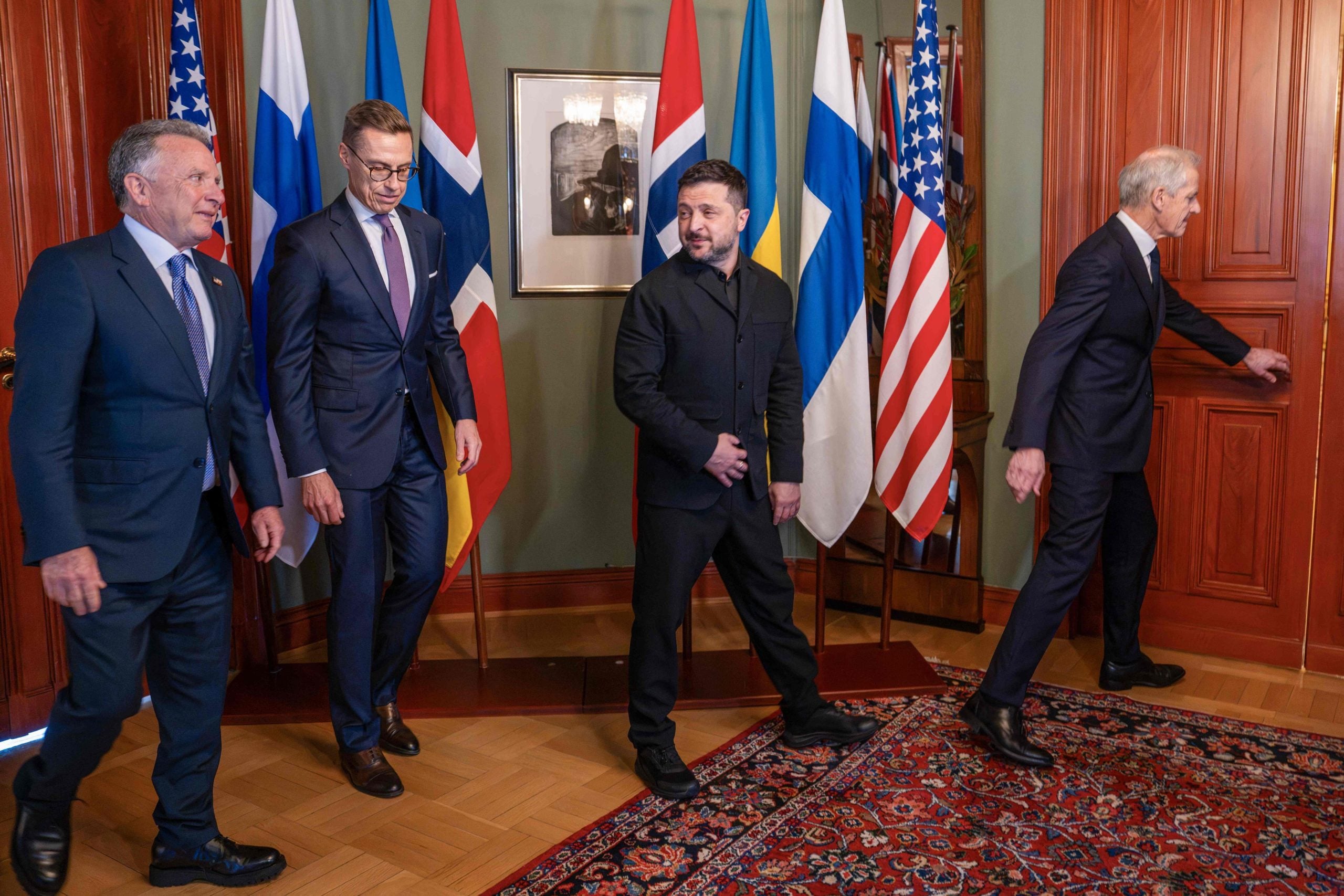

Finland took on a diplomatic role larger than its size would suggest when President Alexander Stubb and Norwegian Prime Minister Jonas Gahr Støre called Vladimir Putin on 27 October.
Prepared in cooperation with Ukraine and the United States, the controversial call conveyed Ukraine’s messages to the Kremlin ahead of peace talks in Abu Dhabi. The two Nordic leaders spoke for their own countries, rather than on behalf of Europe as a whole.
The US-mediated negotiations between Russia and Ukraine on 10–11 November produced an agreement in principle on a major prisoner exchange, but no breakthrough on a ceasefire or territorial disputes. Efforts to continue the negotiations, potentially in a broader format involving European representatives, remain under way.
Stubb’s close contacts with US President Donald Trump and Ukrainian President Volodymyr Zelenskyy should not be overstated. Personal relationships alone cannot resolve the fundamental disagreements blocking peace.
They can, however, help keep diplomatic channels open and Washington engaged. That matters both for continued support for Ukraine and for strengthening Europe’s contribution to NATO’s collective defence.
The immediate priority is a ceasefire and peace in Ukraine. But the stakes extend well beyond Ukraine’s borders. The negotiations also concern the future shape of European security, with direct consequences for Finland and other countries bordering Russia.
Even before launching its full-scale invasion in February 2022, Moscow demanded a rollback of NATO’s military presence in member states that had joined the alliance after 1997. Its aim was to reshape Europe’s security order in Russia’s favour and secure an effective veto over other countries’ choices.
The same ambition now comes wrapped in diplomatic language.
In its account of the October call, the Kremlin said Putin had insisted that a lasting peace required full and unconditional consideration of Russia’s purportedly legitimate interests. It also blamed the policies of EU and NATO countries for prolonging the war.
This is the backdrop against which discussions about a new European security framework must be judged. Moscow’s demands concern far more than the terms of a settlement in Ukraine.
European representatives were already present in Abu Dhabi. Officials from the EU, France, Germany, Italy, the United Kingdom and NATO met their Ukrainian and American counterparts on 10 November. Their participation in the negotiations with Russia itself, however, remains unresolved.
Europe must have a meaningful say in decisions affecting its own security. Its role cannot be confined to implementing arrangements negotiated by others.
Although the talks have yet to deliver a breakthrough, Stubb’s willingness to take the initiative in coordination with Ukraine and the United States may still find a receptive audience in the White House.
If American officials see European allies taking responsibility and demonstrating both the ability and the willingness to advance diplomacy, that could help negotiations move forward, even in small steps. It could also create opportunities to strengthen military and financial support for Ukraine. This is something critics of the call seem to have missed.
The same logic applies to NATO. A clearer division of responsibilities, with Europeans shouldering more of their own defence, could help anchor the United States more firmly in European security.
For Finland, the objective should be to strengthen Europe’s capacity to act while keeping the Americans committed. Both are essential to a credible defence of the continent.
Europe cannot allow the Kremlin to dictate either the terms of peace in Ukraine or the security order that follows.
NATO’s first secretary general, Lord Ismay, famously described the alliance’s purpose as keeping “the Russians out, the Americans in and the Germans down”.
An updated version would fit today’s challenge: keep the Russians out, the Americans in and the Europeans committed.