
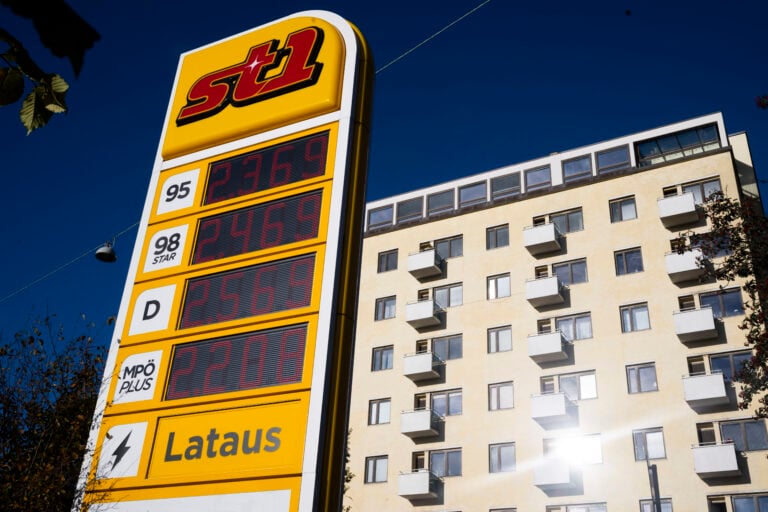
The Finnish Entrepreneurs organisation is urging the government to speed up plans for a tax-relief scheme on diesel used by professional transport operators after ministers agreed on a €60 million package to ease the impact of rising fuel prices.
Päivi Puonti, director and chief economist at Finnish Entrepreneurs, welcomed the package but said temporary support would not solve the transport sector’s cost problems in the longer term.
“Attention must now turn to the professional diesel scheme. There is no longer any room for delay. The government proposal must be submitted to Parliament this autumn and the system must be introduced as quickly as possible,” Puonti said in a statement.
The government plans to allocate €30 million in direct fuel support to businesses in the transport, agriculture and forestry sectors. The precise allocation of the support will be decided during further preparations.
The package also includes a reduction in the basic component of vehicle tax and an increase in the maximum deduction available for commuting expenses.
Call for a longer-term solution
Finnish Entrepreneurs wants the professional diesel scheme to be brought forward and says the tax rebate offered under the system must be large enough to have a meaningful impact on transport companies’ costs.
“The support agreed now will help with the acute situation, but companies need a predictable and more permanent solution. The professional diesel scheme must be brought across the finish line quickly,” Puonti said.
The organisation also argues that relief measures should not be limited to heavy goods vehicles. Small and medium-sized businesses using lighter commercial vehicles, as well as machinery companies relying on fuel oil, have also faced sharply higher costs.
According to Puonti, rising transport costs have consequences across the wider economy, meaning that solutions will also be needed for companies left outside the professional diesel scheme.
Finnish Entrepreneurs also wants the government to continue examining competition in the fuel market. The organisation says stronger competition could bring prices down more permanently without additional costs to the state.
National Coalition Party MP Marko Kilpi also welcomed the government’s agreement, saying the package would provide relief to commuters, transport companies and the agricultural sector.
Kilpi stressed that the measures will not be financed through additional government borrowing. According to his statement, the costs will instead be covered by corresponding spending cuts.
He also said the National Coalition Party had opposed lowering the basic level of Finland’s renewable fuel distribution obligation, arguing that doing so would increase dependence on fossil fuels and weaken incentives for domestic energy production.