

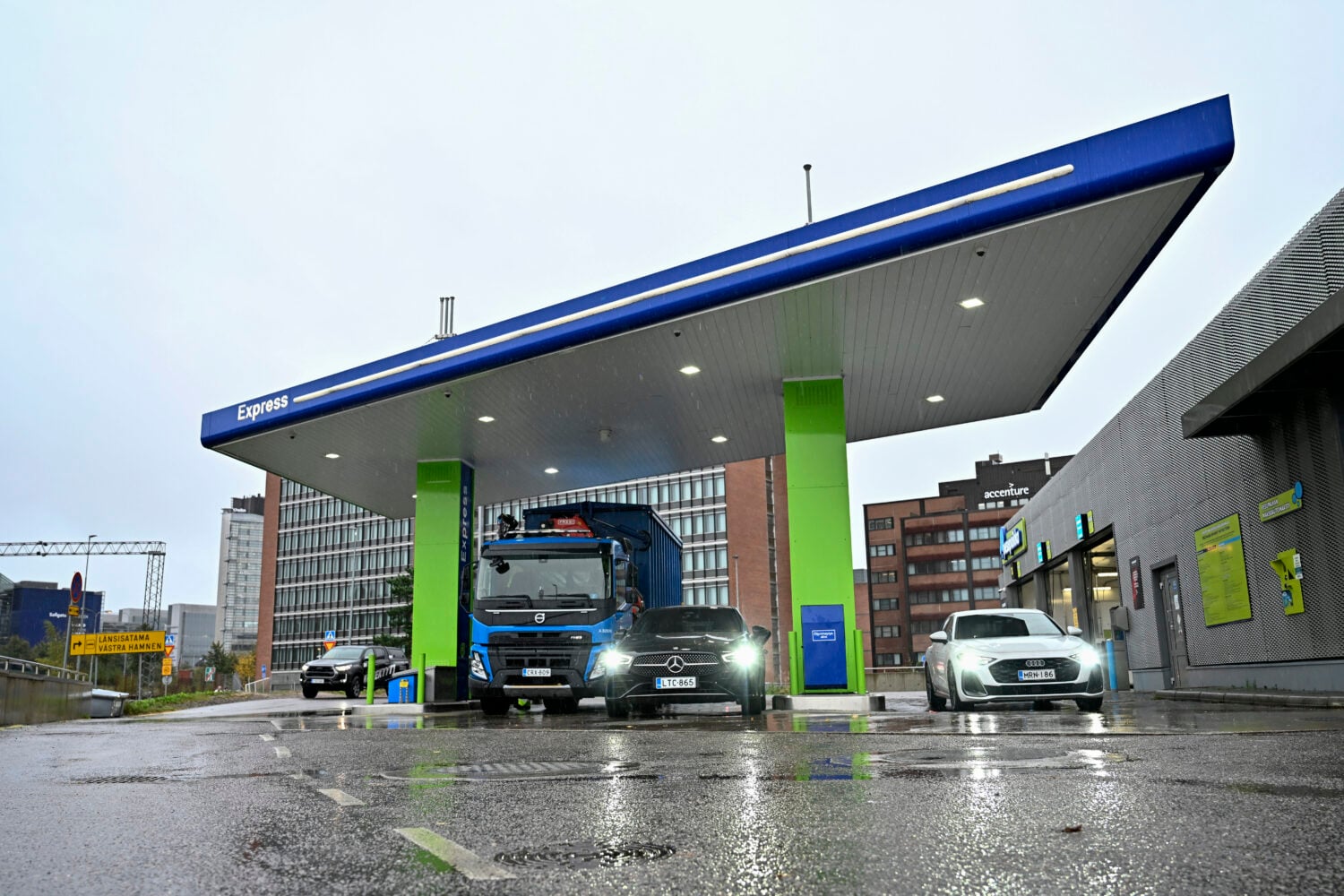
Finland’s government has reached an agreement on measures to ease the impact of high fuel prices, ending a dispute between the coalition parties over how to respond.
The €60 million package includes direct fuel support, vehicle tax reductions and a higher tax deduction for commuting expenses.
The government will allocate €30 million in fuel support to the transport sector and agricultural and forestry entrepreneurs. The precise form of the support will be decided during further preparation, as it remains uncertain which measures will be permitted under EU rules next year.
The maximum annual deduction for commuting expenses will meanwhile rise from €7,000 to €7,800 in 2027, at a cost of approximately €10 million.
The government will also expand a previously agreed reduction in the basic component of Finland’s vehicle tax. The total reduction will amount to €30 million, including €20 million in new measures agreed as part of the package.
Renewable fuel mandate remains intact
One of the most contentious issues in the negotiations was Finland’s renewable fuel distribution obligation.
The Finns Party had called for the obligation to be lowered as a way of reducing prices at the pump. National Coalition politicians opposed such a move, arguing that it would weaken incentives for domestic renewable fuel production and increase Finland’s dependence on imported fossil fuels.
The agreement does not lower the level of the distribution obligation.
Instead, the government will introduce additional flexibility intended to allow fuel suppliers to meet the requirements more cost-effectively. Limits on both cross-fulfilment between obligations and carrying over excess compliance will be increased from 30 per cent to 100 per cent.
Earlier on Thursday, National Coalition parliamentary group leader Jukka Kopra warned that weakening the mandate could undermine Finland’s energy security.
“Finland’s security must not be dependent on oil sheikhs or Russia,” Kopra said.
“We have seen how Russia uses energy dependence as a tool of pressure. Finland must reduce dependencies that other countries can use against us.”
Kopra argued that predictable demand for renewable fuels supports domestic production and reduces exposure to volatile international oil markets.
National Coalition MP Pauli Aalto-Setälä has made a similar argument, saying the current spike in pump prices is primarily the result of higher fossil fuel prices rather than renewable fuels.
€40 million redirected from carbon capture funding
The government says the package will be financed within its existing spending limits.
Of the €60 million, €40 million will be redirected from funding that had been reserved this year for building capacity to capture biogenic carbon dioxide but is expected to remain unused.
The remaining €20 million will come from a reduction in funding for basic transport infrastructure maintenance.
Prime Minister Petteri Orpo had said earlier this week that the government had little fiscal room available and that any support should therefore be targeted mainly at people who need a car for work and sectors particularly exposed to high fuel costs.
The agreement resolves the immediate coalition dispute over the support package, while preserving the existing level of Finland’s renewable fuel obligation.