
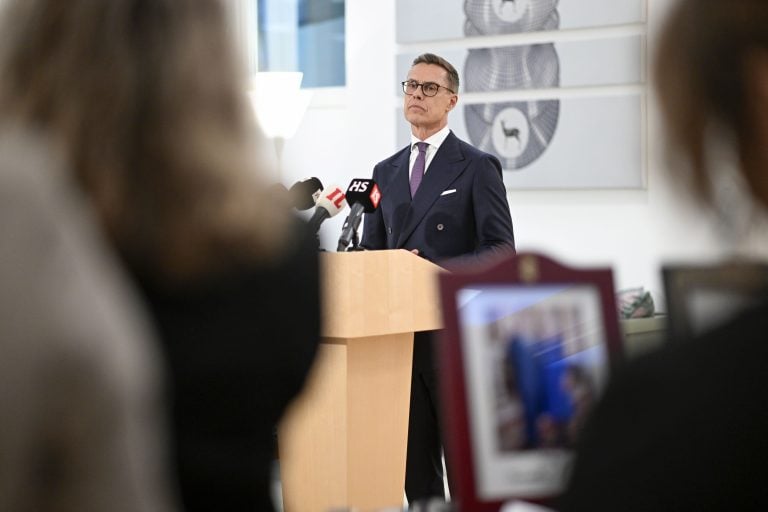
Finnish foreign and security policy expert Henri Vanhanen has pushed back against international criticism of President Alexander Stubb and Norwegian Prime Minister Jonas Gahr Støre over their phone call with Russian President Vladimir Putin.
Writing on X, Vanhanen argues that some of the initial accusations were premature and that subsequent reporting shows the initiative was closely connected to Ukraine’s diplomatic efforts.
According to Stubb, the peace process had been in serious trouble before a meeting in Oslo on October 20.
“We had a strong feeling that the peace negotiations were about to collapse,” Stubb said after the Putin call, adding that the Oslo meeting helped put the process and relations between Ukraine and the United States back on track.
Stubb has said the later call with Putin was prepared together with Ukraine and the United States.
Finnish news agency STT has reported, citing sources familiar with the process, that there was even concern that US participation in the diplomatic effort could end. According to the report, Ukraine’s request for assistance was the central reason Finland and Norway became involved.
Ukraine backed the initiative
The Oslo talks brought together Stubb, Støre and Ukrainian President Volodymyr Zelenskyy with US special envoy Steve Witkoff. Jared Kushner participated remotely. National security advisers from Britain, Germany, Italy, the EU and NATO later joined a working dinner. Ukraine had specifically requested the participation of the US envoys.
The subsequent call to Putin on October 27 was officially described by Finland and Norway as having been held “in consultation with Ukraine”. Its purpose was to convey messages concerning the upcoming negotiations in Abu Dhabi directly to the Russian leader.
Vanhanen stresses that Zelenskyy supported the initiative. After the call, the Ukrainian president publicly thanked Stubb and Støre for a detailed briefing and said they had made clear to Putin that Russia needed to take concrete steps to reduce attacks on Ukraine’s energy system and infrastructure.
Vanhanen has also responded to sceptics by saying there is clear evidence that Zelenskyy requested the diplomatic assistance. Stubb himself has publicly said Finland acted at Ukraine’s request and would not discuss Ukraine “over Ukraine’s head”.
Dispute over European coordination
The call nevertheless exposed disagreements among Nordic leaders.
Danish Prime Minister Mette Frederiksen criticised the initiative, saying it had not been coordinated with other European countries and questioning what Finland and Norway expected to achieve. Sweden’s Ulf Kristersson also expressed scepticism and said he had not been properly informed beforehand.
Stubb and Støre have given a different account. Stubb said key allies, including all Nordic countries, had been informed before the call and were briefed afterwards.
The criticism appeared partly to reflect a fundamental disagreement over whether direct contact with Putin should take place at all.
Vanhanen notes that being informed, being consulted on whether a call should take place and agreeing with the decision are not the same thing.
Denmark’s Foreign Minister Lars Løkke Rasmussen later acknowledged that Ukraine’s initiative and speaking on Ukraine’s behalf were important elements, while still calling for better Nordic coordination in the future.
Different accounts of the Putin call
There has also been disagreement over what happened during the roughly 90-minute conversation.
The Financial Times reported that Putin spent much of the call lecturing the Nordic leaders about Russian history.
Finnish reporting has presented a different picture. STT’s sources described the exchange as substantive rather than a one-sided monologue and said Stubb and Støre questioned Putin about the planned Abu Dhabi negotiations. They also told Moscow that continuing the war would not weaken European support for Ukraine.
Stubb has said the discussion covered possible de-escalatory measures concerning energy production and infrastructure, food security and prisoner exchanges. He also raised freedom of navigation in the Baltic Sea and stressed Finland’s commitment to international and maritime law.
The official Finnish and Norwegian account described the conversation as “frank and substantive” and said regional security in the Baltic Sea and the High North was also discussed.
Vanhanen argues that the risks of opening the channel were understood in advance, including criticism from allies and the possibility that Moscow would exploit the conversation for propaganda.
STT reported a similar assessment from Finnish sources. One described the decision as an example of Finland’s “values-based realism”: maintaining principles while sometimes accepting political risks in order to pursue diplomatic objectives.
For Vanhanen, the central point is that direct contact should not be interpreted as an attempt to normalise relations with Moscow.
Ukraine asked for diplomatic assistance, he argues, and Finland and Norway responded while coordinating with Kyiv and Washington.
“Supporting Ukraine for as long as necessary must also mean supporting it in the ways Ukraine actually asks for,” Vanhanen writes.
He argues that military strength, economic pressure and diplomacy should be seen as complementary tools rather than competing approaches.
For my English-speaking followers, let's get the facts straight about the Stubb–Støre call with Putin.
— Henri Vanhanen (@HenriVanhanen) October 28, 2026
New reporting from Finland provides important details missing from much of the international debate. Some of the initial accusations now look rather premature.
First, why did… pic.twitter.com/iI97nWZPiK