
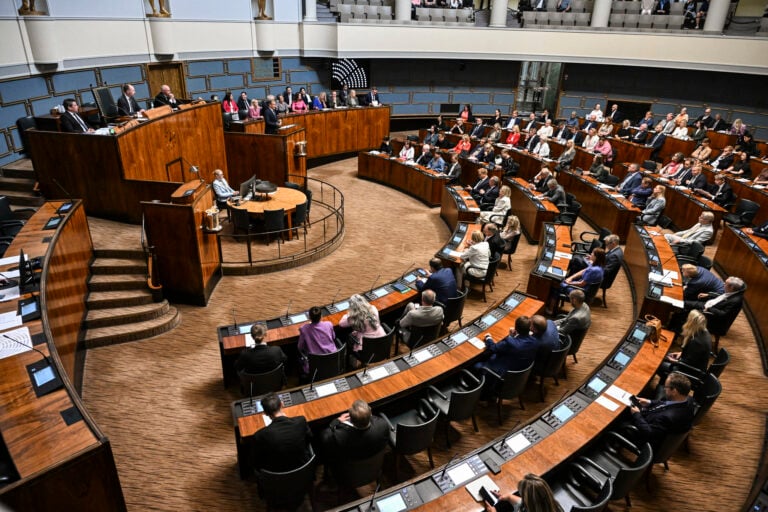
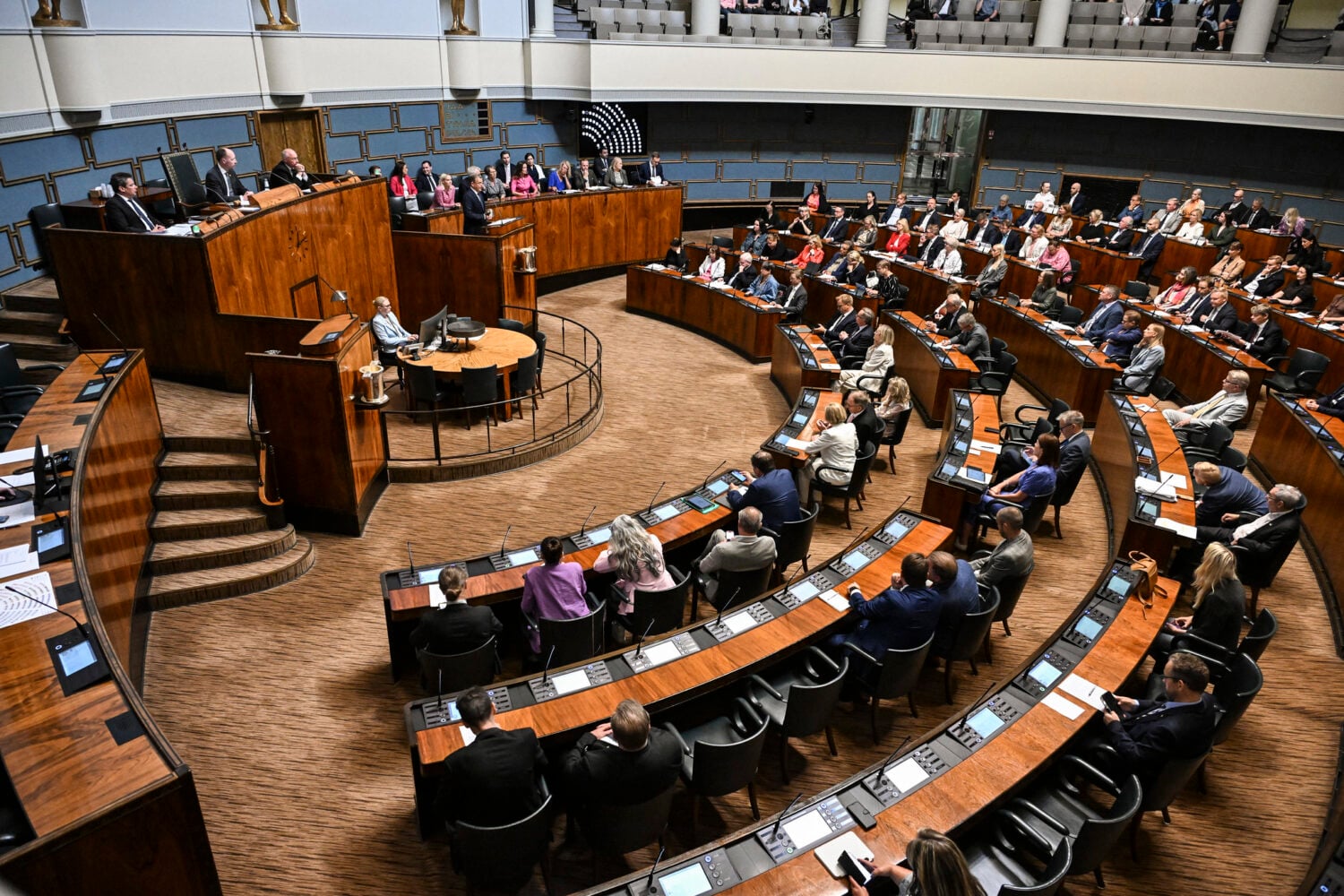
Finland’s parties have clashed over potential coalition partners after the Finns Party edged ahead of the National Coalition Party in public broadcaster Yle’s latest opinion poll.
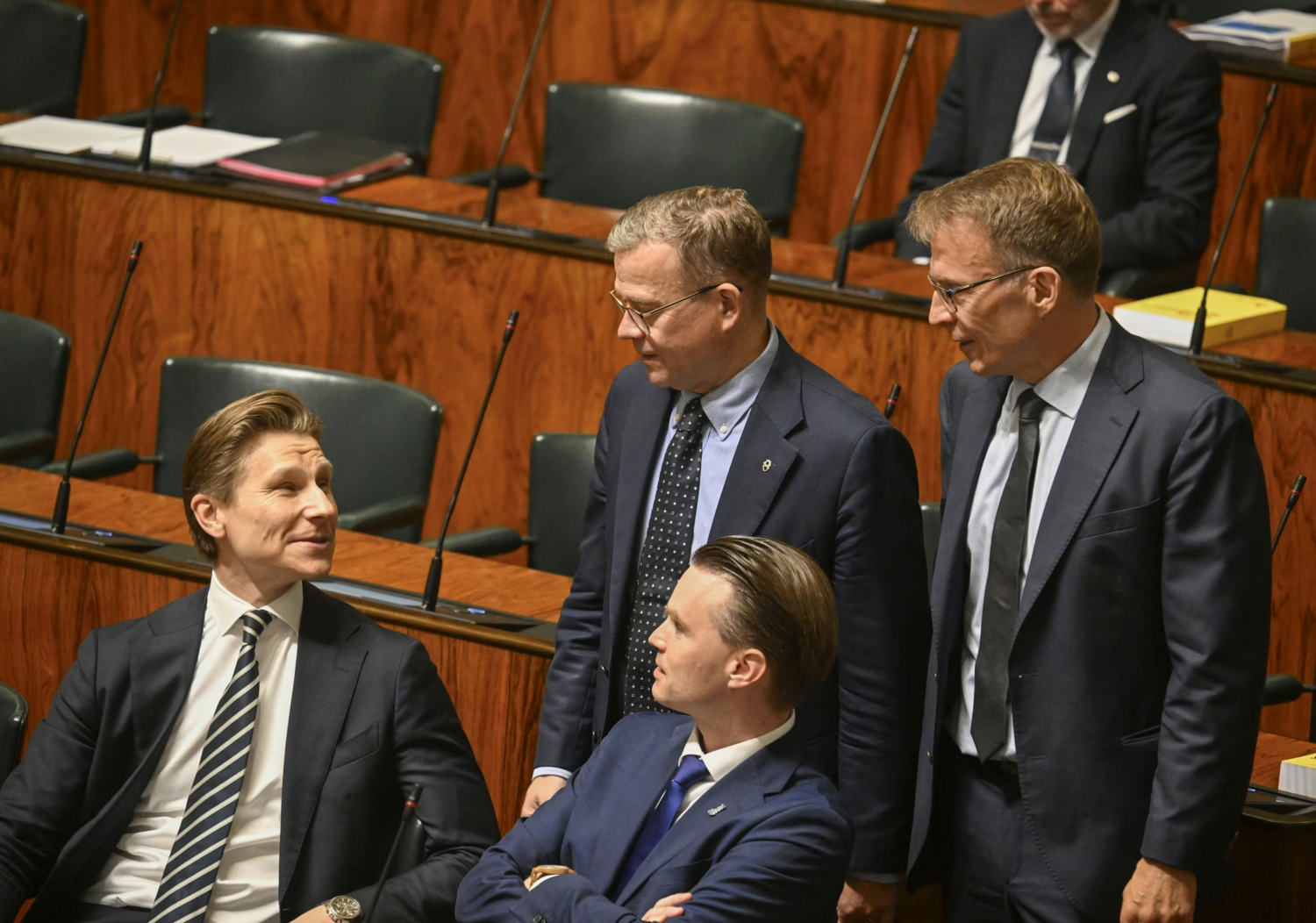
Social Democratic Party (SDP) leader Antti Lindtman said that his party would not govern with the Finns Party under any circumstances. Jani Mäkelä, the Finns Party’s parliamentary group leader, told Ilta-Sanomat that if the SDP excluded his party, it would respond in kind.
National Coalition parliamentary group leader Jukka Kopra urged both sides to lower the temperature.
“Keep cool, Lindtman and Mäkelä! In difficult times, we need to build bridges, not burn them,” he wrote on X.
Centre Party MP Jouni Ovaska also warned against ruling out partners, arguing that Lindtman would need the Centre, the National Coalition Party or the Finns Party, and possibly two of them.
A constituency-based calculation prepared by Verkkouutiset illustrates the parliamentary arithmetic behind that debate. It puts the Social Democrats on around 51 seats, the Finns Party on 36 and the National Coalition Party on roughly 34–35.
The Left Alliance would win around 24–25 seats, more than doubling the 11 it secured in the 2023 election. The National Coalition Party, which won 48 seats that year, would lose around 13–14.
The calculation uses Yle’s October poll, which puts the SDP on 22.7 per cent, the Finns Party on 16.5 per cent and the National Coalition Party on 16.3 per cent. It is a model of what current support could mean for seats, not an election forecast issued by Yle.
Neither grouping would command a majority
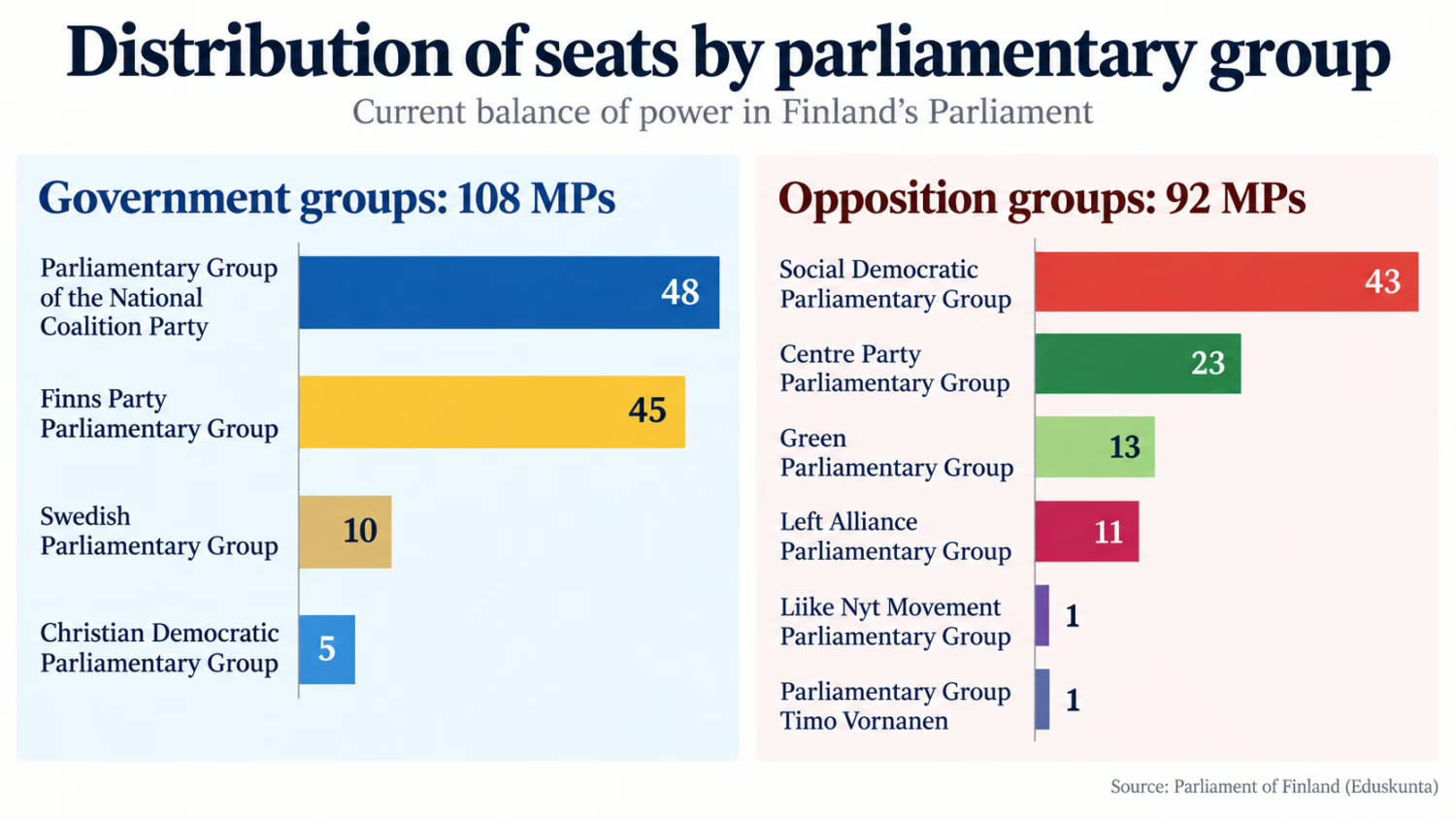
Prime Minister Petteri Orpo’s government comprises the National Coalition Party, the Finns Party, the Swedish People’s Party and the Christian Democrats.
Those parties won a combined 108 seats in 2023. Using the rounded estimates in the table, their total would fall to 81, well below the 101 seats required for an outright majority.
However, stronger support for the left would not automatically produce an alternative majority. The Social Democrats, Left Alliance and Greens would together hold 91 seats.
Adding the Centre Party would bring that total to 117. The Social Democrats and National Coalition Party, meanwhile, would have 85 seats between them and would also need additional partners.
These are arithmetic possibilities, not indications of which parties would agree to govern together. The Centre would offer one route to a majority, rather than being the only possible partner.
The Finns Party finishes ahead of the National Coalition Party in roughly two-thirds of the simulations. That gives it an advantage within the model, but the figure should not be read as an election-day probability.
How the estimates were calculated
The model starts with the 2023 constituency results and adjusts party support to the October polling figures. Seats are then allocated constituency by constituency using the d’Hondt method employed in Finnish parliamentary elections.
Its 20,000 simulations vary polling support and the way national changes are distributed between constituencies, ranging between proportional changes and equal percentage-point shifts. They also add a random constituency-level deviation of about 8 per cent of each party’s projected vote share.
The regional variation assumption has not been calibrated against previous elections. Random adjustments are drawn independently for each party and constituency, so the model does not explicitly capture connections between parties’ local gains and losses.
Electoral alliances and candidate-specific effects are not included. The Left Alliance’s estimated gains are particularly sensitive to where its additional support is located. Movement Now’s projected seat in Uusimaa is especially dependent on individual candidates, a risk not captured by its narrow simulation range.
The calculation retains the constituency seat allocations used in 2023. The official allocation for 2027 will be decided in November, based on the number of Finnish citizens living in each constituency on 31 October 2026.
Taloustutkimus conducted Yle’s poll between 7 September and 5 October, interviewing 2,807 adults in mainland Finland. Of those, 2,089 stated a party preference. The maximum reported margin of error was 1.8 percentage points in either direction.
Finland’s next parliamentary election is scheduled for 18 April 2027, leaving roughly six months for voting intentions to change before the seats, and the options for forming a government, are decided.