
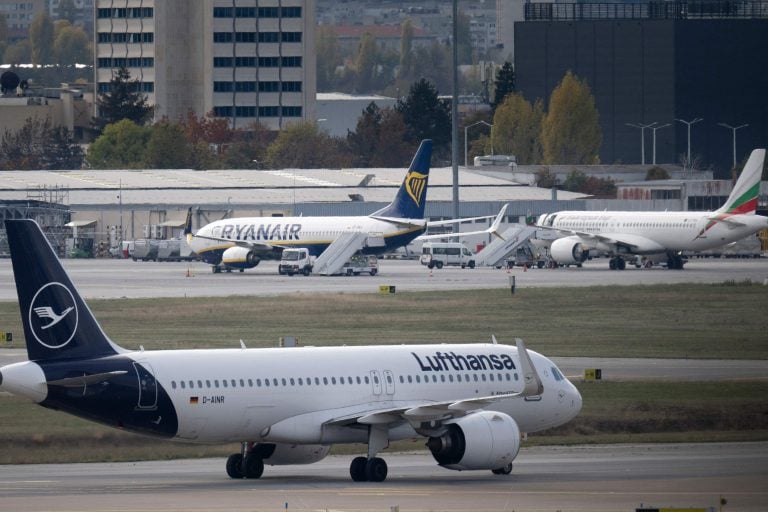
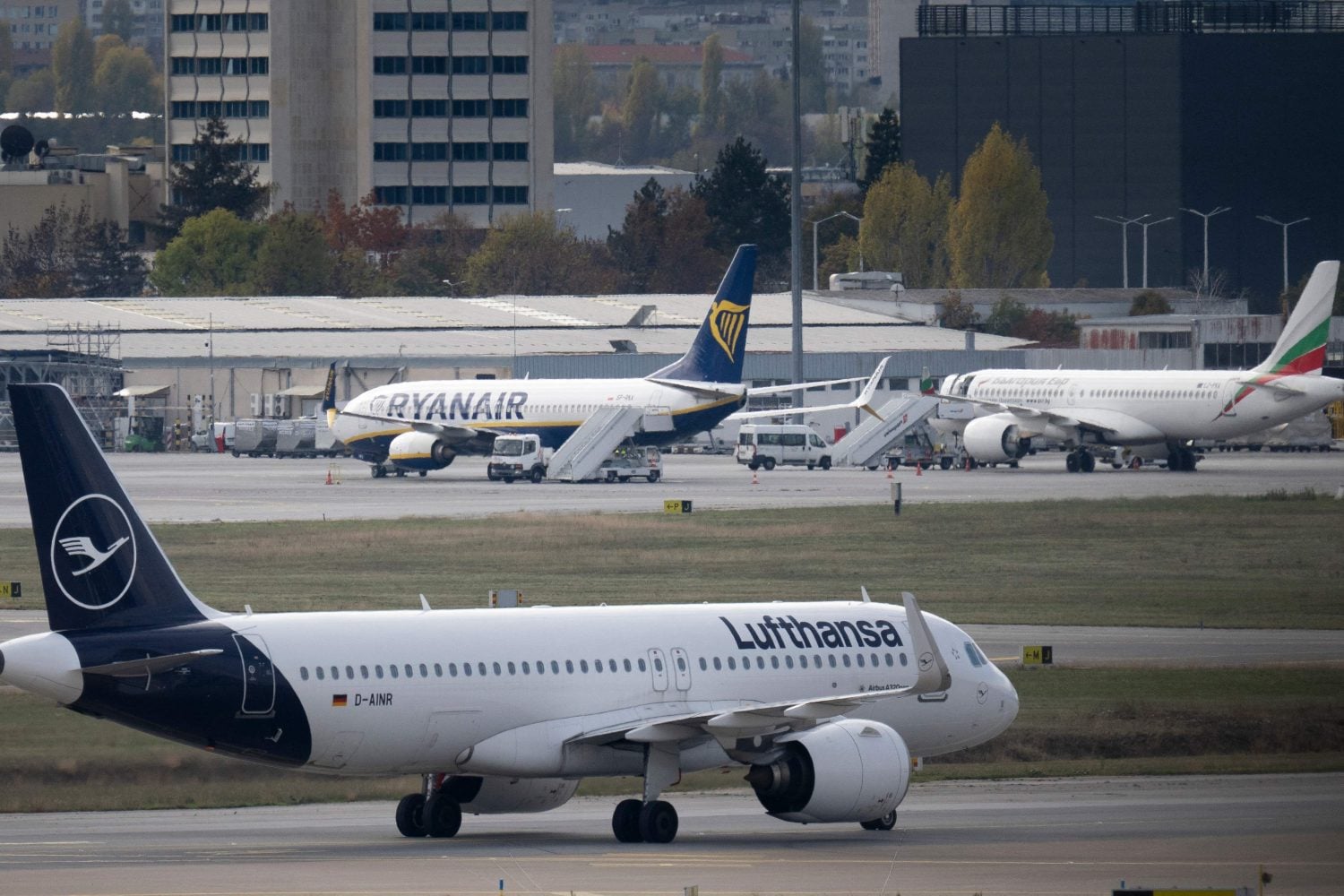
A wave of hoax bomb threats has disrupted air travel across Europe, forcing aircraft diversions, security searches and fighter-jet escorts while raising questions over whether the real target could be the continent’s security response itself.
At least 21 aircraft and several airports were targeted on Thursday in the second major wave of threats this week, according to the BBC. Flights involving Austria, Belgium, Bulgaria, the Czech Republic, France, Italy, Poland and Romania were among those affected. No explosives were found.
Two Finnair services from Helsinki were caught up in the disruption.
Finnair confirmed to Finnish public broadcaster Yle that flight AY1761 from Helsinki to Rome received a bomb threat. The aircraft landed safely and was inspected by local authorities, who found nothing suspicious. A second false threat targeted a Helsinki–Vienna service operated by Jettime on Finnair’s behalf.
The response to the Rome flight illustrates how a single threat can mobilise substantial resources.
Croatia’s Ministry of Defence said one of its Rafale fighters intercepted the Finnair Airbus A320 after it entered Croatian airspace on Thursday morning. The fighter escorted the passenger aircraft to the Italian border, where responsibility was handed over to Italian quick-reaction aircraft.
Finnish MP and doctor of military science Jarno Limnell says that asymmetry could itself be significant.
“One email can trigger a major operation. That is the asymmetry of these threats: the act costs the perpetrator almost nothing, while the consequences for society are expensive. Are they now testing Europe’s response capability?” Limnell wrote on X.
He cautioned that neither the perpetrator nor the motive is known.
If the threats are coordinated, Limnell said, their purpose could extend beyond disrupting individual flights. They could potentially be used to observe how authorities react, consume security resources and undermine the public sense of safety.
Russian group’s name appears in a threat
The identity of those responsible remains unclear.
The BBC reported that one threatening email sent to airport authorities in Rome used the name “Fighters of the Male State”. The reference appears to point toward Male State, a Russian ultra-nationalist and misogynistic online movement.
Male State was founded by Vladislav Pozdnyakov in 2016 and built a substantial online following. Russia’s Nizhny Novgorod regional court declared the movement an extremist organisation and banned its activities in October 2021.
RFE/RL reported at the time that the movement had been associated with racist and misogynistic campaigns, threats against feminist and LGBT activists and coordinated online harassment. The group functioned largely as a loose network of social-media and messaging-platform communities rather than a conventional organisation.
The use of its name in a bomb threat does not establish that the movement itself, its supporters or anyone connected to Russia was responsible.
The BBC’s security analysis published after the latest incidents stresses that there is so far no hard evidence linking the aviation threats to Russia, Iran or proxy groups acting for either country. A name attached to an anonymous email can be genuine, misleading or deliberately planted to complicate attribution.
Europe is already watching for hybrid threats
The uncertainty comes at a time when European governments are increasingly concerned about operations designed to create disruption without crossing the threshold into conventional armed conflict.
NATO describes hybrid threats as activities in which state or non-state actors combine military and non-military methods such as deception, propaganda, sabotage and other forms of interference to destabilise adversaries and undermine public security.
The Alliance says the scale, speed and intensity of such activity have increased in recent years. NATO has separately warned that hostile actions affecting Allied countries have included cyberattacks, sabotage of critical infrastructure and disruption of civil aviation.
That wider security environment helps explain why a coordinated series of apparently false bomb threats attracts attention beyond ordinary aviation security.
It does not, however, prove that this week’s incidents form part of a state-directed hybrid operation.
European aviation security is built around the principle that even a threat that appears implausible may have to be assessed and acted upon. EU rules require member states, airports and airlines to maintain security programmes covering aircraft searches, access controls, screening and responses to unlawful interference.
That creates the imbalance highlighted by Limnell: sending a message can be easy, while determining whether it is genuine can require aircraft diversions, police operations, inspections and military responses.
For investigators, the key questions are therefore not only who sent the threats, but whether they came from the same source and what the sender hoped to achieve.
For now, the evidence supports one conclusion more firmly than any theory about responsibility: the threats have demonstrated how cheaply an anonymous actor can force European security systems to react on a large scale.