
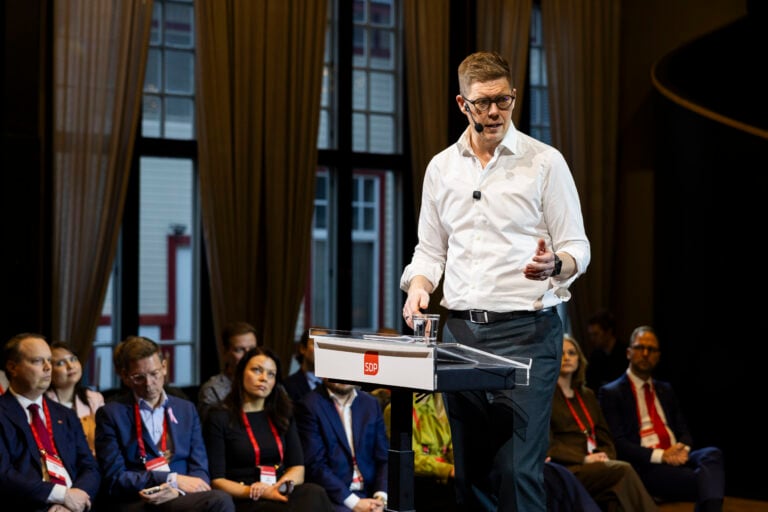
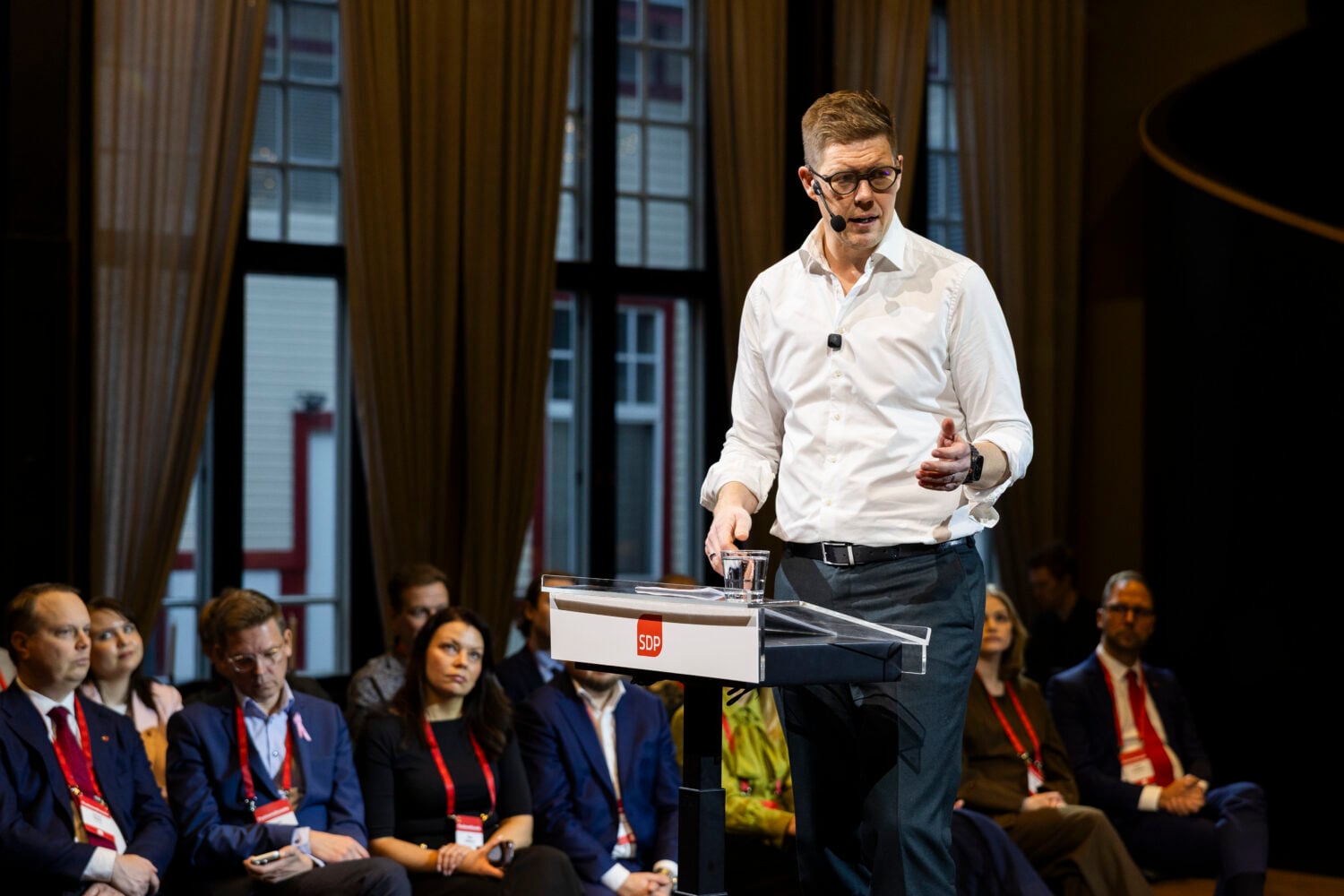
Finland’s main opposition party, the Social Democratic Party (SDP), would increase the number of people classified as low-income under its alternative budget for 2027, National Coalition Party (NCP) MP Pauli Aalto-Setälä points out.
Writing in his blog, Aalto-Setälä questioned the opposition parties’ economic policies following Wednesday’s parliamentary debate on their alternative budgets.
“The strangest aspect of the calculations presented by the party leading the opinion polls was the increase in poverty. The SDP, which has accused Prime Minister Petteri Orpo’s government of targeting low-income earners, would increase the number of people on low incomes by 17,600,” Aalto-Setälä writes.
Finland’s opposition parties traditionally present alternative budgets towards the end of the year, outlining how they would manage public finances if they were in government.
With Finland’s next parliamentary election approaching in spring 2027, the proposals also offer an indication of the parties’ economic policy priorities for the next parliamentary term.
More people below the relative poverty line
According to calculations prepared by the Finnish Parliament’s Information Service, the SDP’s proposed measures would increase the number of low-income individuals by 17,596 compared with a baseline scenario based on permanent legislation.
The corresponding increase under the government’s budget proposal would be 16,860. This means that the SDP’s alternative would result in 736 more people being classified as low-income than under the government’s plan.
The differences are particularly pronounced among older people. Under the SDP’s alternative, approximately 5,000 more people aged over 65 would fall below the relative poverty threshold compared with the government’s proposal. However, the number of low-income children would be lower.
Finland follows the European statistical definition of relative poverty, under which individuals are classified as being at risk of poverty if their household’s disposable income, adjusted for household size, falls below 60 per cent of the national median.
SDP MP Joona Räsänen defended his party’s proposal on Wednesday, arguing that the increase in relative poverty was attributable to middle-income households experiencing proportionally larger income gains than low-income households.
Speaking to Demokraatti, the Social Democrats’ party newspaper, Räsänen maintained that the SDP’s proposals would not reduce the disposable income of any low-income individual compared with the government’s budget.
Taxation remains a major dividing line
Aalto-Setälä also drew attention to the fact that the Social Democrats would retain many of the spending cuts already implemented by Prime Minister Petteri Orpo’s centre-right government.
“Much to everyone’s surprise, the SDP would now accept these measures, despite having fiercely opposed every spending cut for almost four years.”
Aalto-Setälä welcomed the willingness to reconsider policies in light of new information but suggested that some Social Democratic voters might be puzzled by the change in position.
According to him, the most significant difference between the National Coalition Party and the opposition parties concerns the taxation of work and entrepreneurship.
The SDP’s alternative budget proposes higher taxation of high-income earners and the cancellation of the government’s planned corporate tax cut. It would also reduce income taxes for low- and middle-income earners and increase funding for healthcare services.
The Social Democrats say their proposals would reduce government borrowing by more than one billion euros compared with the government’s budget.
Aalto-Setälä argues that the opposition parties’ reliance on tax increases is something Finnish voters should bear in mind as the election approaches. He also warns that the difficult task of bringing Finland’s public expenditure under control is far from complete.