
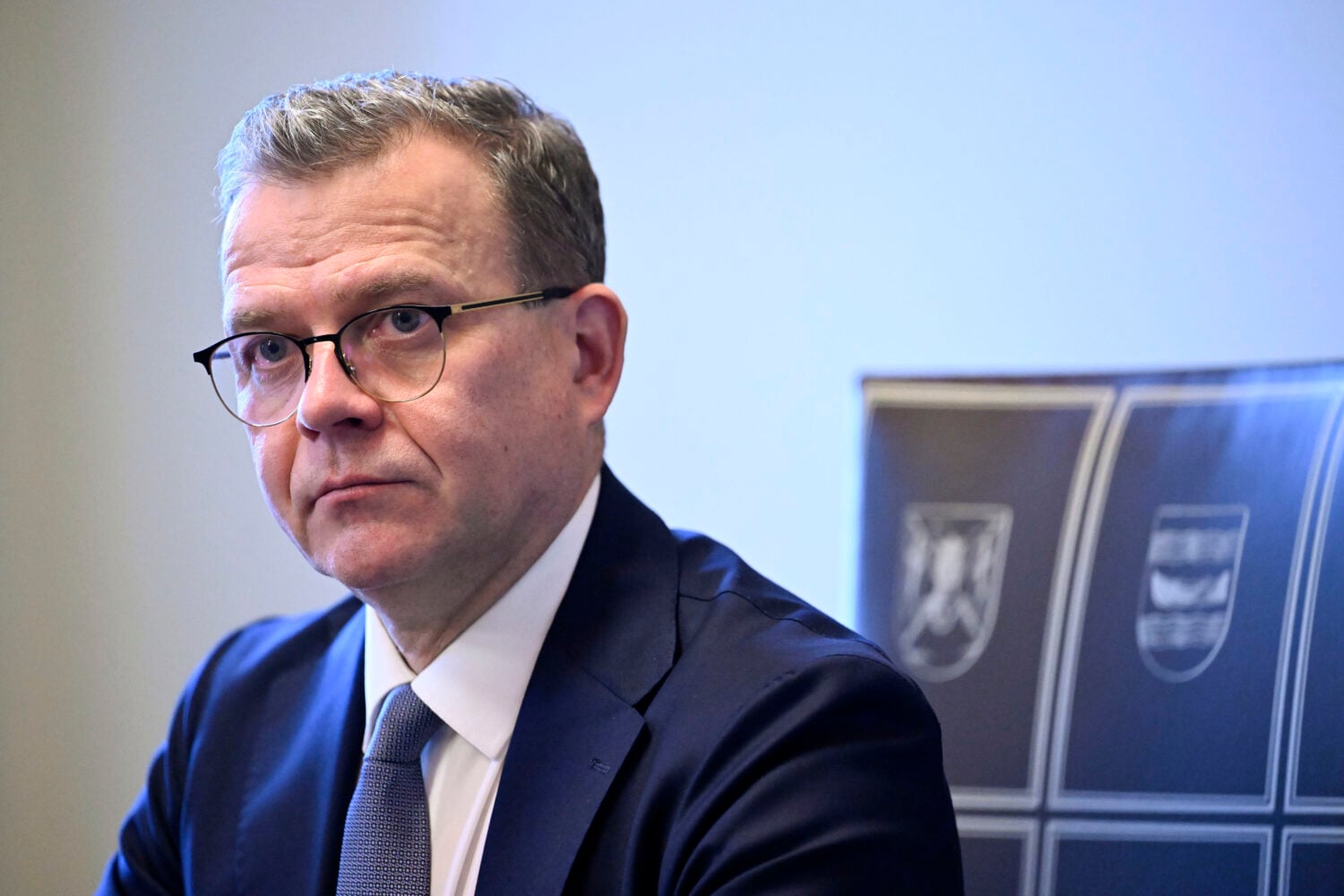
Finnish Prime Minister Petteri Orpo says support for Ukraine must remain the European Union’s main priority as EU leaders prepare to meet in Brussels on 15–16 October.
Speaking in Parliament on Wednesday ahead of the summit, Orpo said Ukraine’s air-defence situation is challenging as Russia continues intensive strikes against civilian targets and energy infrastructure.
“It is clear that Ukraine’s air-defence capability and its current state are absolutely critical,” Orpo said.
He argued that Moscow is seeking to weaken Ukraine ahead of winter by striking energy infrastructure and other civilian targets.
According to Orpo, the scale and nature of the attacks show that Russian President Vladimir Putin has no genuine interest in negotiations.
Ukrainian President Volodymyr Zelenskyy is expected to take part in part of the European Council meeting, and Orpo said he will also hold a bilateral meeting with him.
Financing Ukraine remains a key issue
Petteri Orpo said EU leaders will also discuss Ukraine’s financing needs and how already agreed support could be made available more quickly.
The use of frozen Russian assets is not formally expected to be the main issue on the table, but Orpo said discussions on possible new mechanisms are continuing in the background.
Finland has supported efforts to find ways of using proceeds linked to frozen Russian assets to support Ukraine.
The prime minister also said Finland wants Ukraine and Moldova to continue advancing in their EU membership processes.
The European Council agenda will also cover defence and security, competitiveness, migration, the Middle East and the EU’s next long-term budget.
Finland wants a smaller EU budget
Orpo said Finland still considers the proposed EU multiannual financial framework for 2028–2034 too large.
The Irish Presidency published a new negotiating proposal on 10 October, but Finland says the reductions proposed so far do not go far enough.
Orpo said the overall level would have to be cut by several hundred billion euros compared with the Commission’s proposal, while protecting areas such as agriculture, border security, defence, research and new technologies.
Germany’s position will be particularly important, he said, because a group of countries seeking a lower overall budget will have more influence if Berlin remains firmly involved.
Energy prices also on the agenda
Energy prices will be another issue at the summit.
The prime minister said Finland is not prepared to reopen the EU emissions trading system because of high fuel prices, although temporary flexibility could be considered during an acute energy crisis.
He argued that Finland’s longer-term answer should be to reduce dependence on imported fossil fuels and continue electrifying transport.
As long as Finland remains dependent on imported energy, Orpo said, international price swings will continue to affect households and the wider economy.
The summit will be the first European Council meeting since June. Finland has already stated that the next EU budget must be smaller and better focused on security, competitiveness and other strategic priorities.