
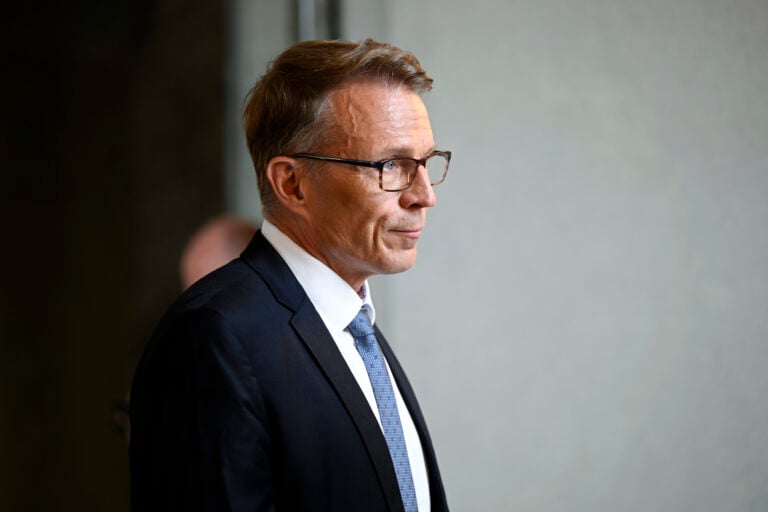
Finland’s governing parties are continuing to clash over fuel policy, with National Coalition parliamentary group leader Jukka Kopra warning that lowering the renewable fuel distribution obligation could make the country more dependent on imported oil.
The obligation requires fuel suppliers to include a minimum share of renewable fuels in petrol and diesel. The Finns Party has proposed lowering it as a way of reducing prices at the pump.
Jukka Kopra argues that the move would weaken incentives for domestic renewable fuel production and work against Finland’s efforts to improve energy self-sufficiency.
“Finland’s security must not be dependent on oil sheikhs or Russia,” Kopra said in a statement on Thursday.
“We have seen how Russia uses energy dependence as a tool of pressure. Finland must reduce dependencies that other countries can use against us.”
The dispute comes as the government searches for ways to ease the impact of sharply higher fuel prices. Prime Minister Petteri Orpo has said approximately €60 million could be allocated to targeted measures, particularly for commuting and professional transport.
The National Coalition Party says the Swedish People’s Party and Christian Democrats have accepted its proposal, while negotiations with the Finns Party remain unresolved.
Dispute over short-term relief
The Finns Party has argued that reducing the renewable fuel obligation could provide broader relief at filling stations.
National Coalition politicians dispute how quickly and significantly such a change would affect prices.
Kopra says the current surge is primarily linked to the price of imported fossil fuels rather than renewable fuels. He argues that Finland, which has no domestic oil or gas fields, should respond by strengthening rather than weakening incentives for domestic alternatives.
He also challenged Finns Party parliamentary group leader Jani Mäkelä to explain how the party would strengthen Finland’s security of supply if the renewable fuel mandate were reduced.
Kopra noted that the Finns Party agreed to the planned trajectory of the distribution obligation in the government programme and has subsequently supported it in coalition negotiations.
“Now the party is presenting itself as a firm opponent of a policy it has itself approved,” he said.
The disagreement has increasingly developed into a broader debate about Finland’s energy security rather than only the immediate price of petrol and diesel.
National Coalition MP Pauli Aalto-Setälä made a similar argument earlier this week, saying predictable renewable fuel requirements encourage investment in domestic production.
He cited more than 40 planned biogas facilities worth almost €900 million and potential bio-refinery investments of more than €2 billion in the coming years.
Kopra says reducing Finland’s exposure to international oil markets should remain a long-term objective even while the government seeks immediate relief for motorists and businesses.
“Finland’s security and security of supply must not be forgotten when seeking quick political gains,” he said.