
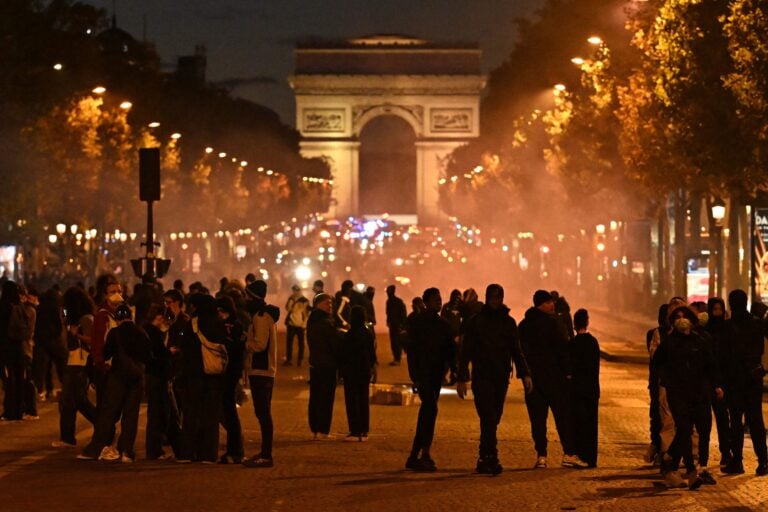
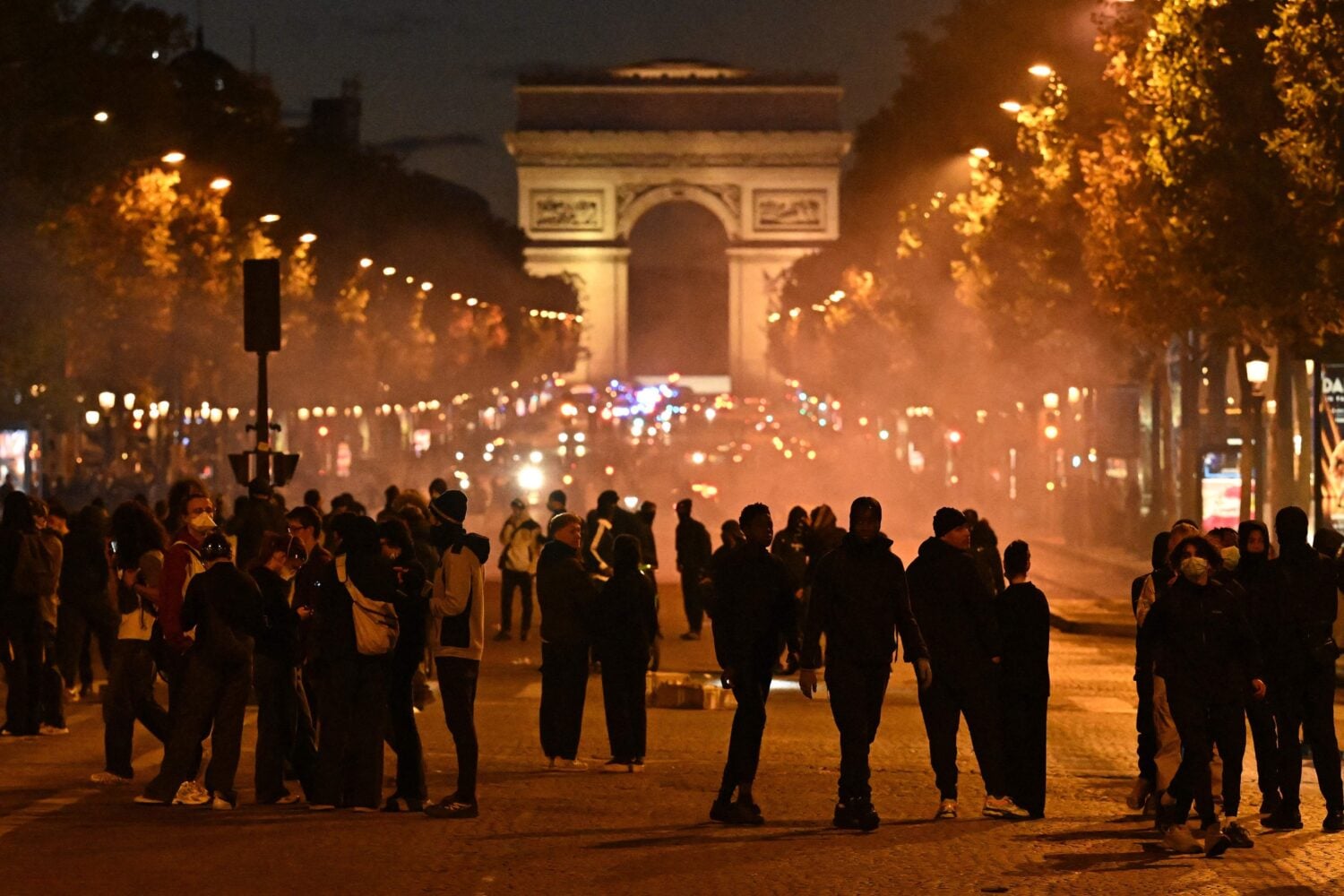
France was assessing extensive damage on Sunday after protests involving hundreds of thousands of people descended into riots, looting and clashes with police in Paris and several other major cities.
Interior Minister Laurent Nuñez said around 1,800 people had been arrested. More than 500 police officers, gendarmes and firefighters were injured during Saturday’s unrest, according to the latest government figures.
The French government estimated that around 550,000 people took part in demonstrations across the country, while organisers put the figure at 800,000. Most participants demonstrated peacefully, but smaller groups engaged in extensive vandalism, attacks on public buildings and looting.
The French Retail and Trade Federation estimates that around 1,500 shops were directly affected by the unrest, with preliminary damage estimates running into hundreds of millions of euros.
In Paris, luxury stores, pharmacies, supermarkets and other businesses were broken into or vandalised. Burned-out cars and bicycles, shattered windows and debris remained across parts of the capital on Sunday morning. Police made 855 arrests in Paris alone, described by local authorities as a record.
The disorder was not confined to the capital, le Monde reports. Protesters breached Marseille city hall, while public buildings were attacked in several other cities. Limoges city hall suffered a major fire, and the official residence of the prefect in Bordeaux was broken into and ransacked.
In Paris, some groups also managed to get within roughly 300 metres of the Élysée Palace as police struggled to contain dispersed and rapidly moving crowds.
Protests bring together several sources of anger
Saturday’s mobilisation brought together a student protest movement that has spread across France in recent weeks with trade unions, cost-of-living protesters and some veterans of the Yellow Vest movement.
High school students have been protesting against teacher shortages, overcrowded classes and deteriorating school buildings. The movement began in September and rapidly expanded to schools across the country.
At the same time, record fuel prices and wider concerns about purchasing power have revived some of the grievances that fuelled the original Yellow Vest movement in 2018. Calls on social media for a major October 17 mobilisation increasingly brought these different protest movements together.
Prime Minister Sébastien Lecornu has accused parts of the radical left of exploiting student anger for political purposes ahead of France’s 2027 presidential election. Opposition politicians and trade unions, meanwhile, have criticised the government’s handling of the demonstrations and police tactics.
President Emmanuel Macron said on Saturday that violence had “no place” in the French Republic and promised that those responsible for attacking public buildings, businesses and town halls would be prosecuted.
The Élysée announced on Sunday that Macron will address the French public at 8 pm local time as pressure mounts on the government over both the unrest and its handling of the wider social crisis.