
Finnish authorities handled the incident involving the Russian cargo ship Sparta II effectively, but Finland’s political leadership ultimately chose the option carrying the least immediate risk, according to Finnish MEP and security policy expert Mika Aaltola of the National Coalition Party.
The Sparta II, a Russian vessel linked to military logistics, was struck by drones in the Gulf of Finland on Saturday while travelling from St Petersburg towards Kaliningrad.
Finland’s Defence Forces have assessed that the attack was probably carried out by Ukraine, although Kyiv has not claimed responsibility.
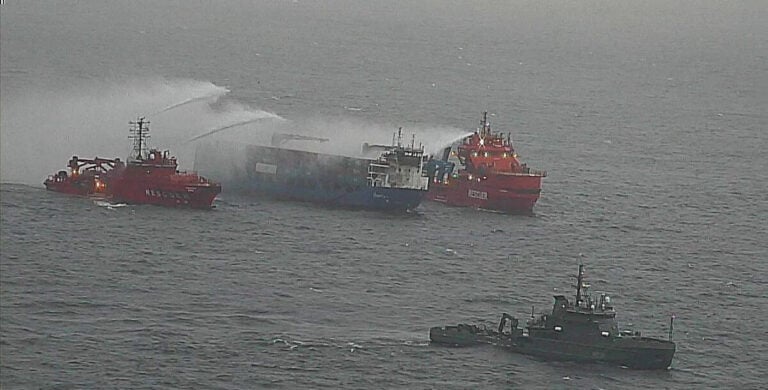
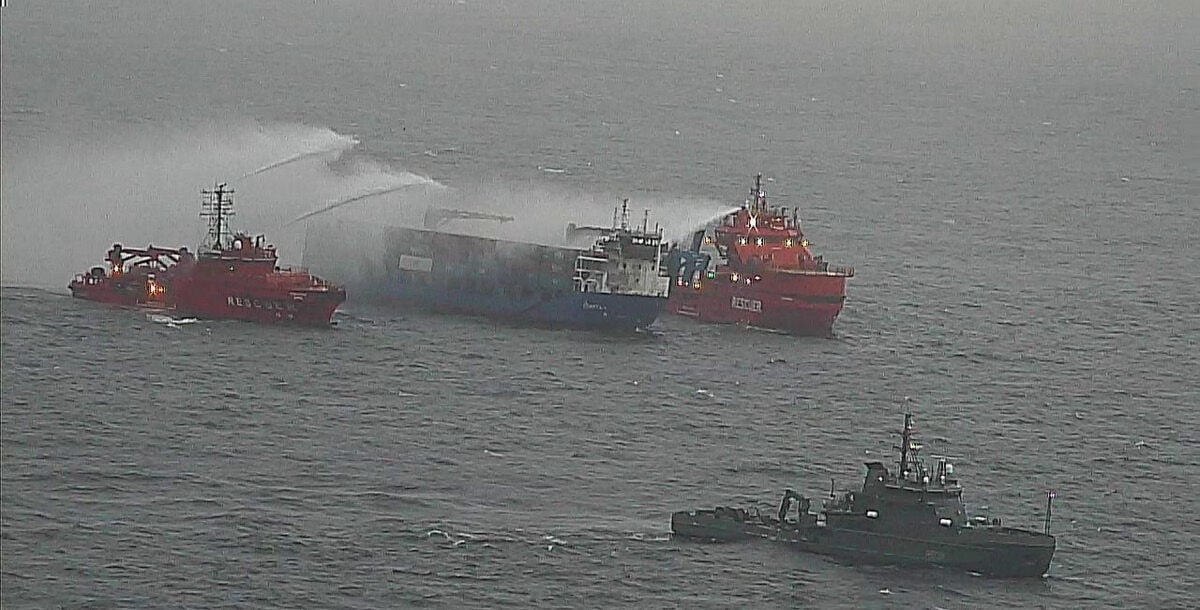
The vessel caught fire, lost manoeuvrability and drifted into Finnish territorial waters off Loviisa. Its 16 crew members were evacuated, with one suffering minor injuries. Finnish, Estonian and Russian rescue assets took part in firefighting and cooling operations.
Aaltola argues that Finland had other options besides allowing Russian rescue vessels to tow the ship away.
He said Finnish authorities could have inspected the ship, noting its links to Russia’s military logistics, or considered freezing and taking control of the vessel because its operator is subject to EU sanctions.
Oboronlogistika, the Russian shipping company associated with the vessel, is listed under EU sanctions. The EU says the company was established under Russia’s Defence Ministry and has supported the Russian armed forces by transporting military equipment. EU sanctions require assets belonging to listed entities within EU jurisdiction to be frozen.
Whether those rules would have provided a legal basis for Finland to seize the Sparta II under the circumstances of an active maritime rescue operation is, however, a separate legal question. Aaltola presented seizure as one possible course of action.
“Moscow has raised the price”
Aaltola said Finland’s decision did not take place in a vacuum.
He pointed to earlier European attempts to act against Russian-linked vessels. Germany took control of the tanker Eventin after it drifted into German waters, while French authorities boarded the Boracay. When Estonia attempted to stop the Jaguar tanker, Russia responded by sending a fighter aircraft, Aaltola noted.
In his view, these cases show that intervention is possible but that Moscow has sought to increase the potential cost.
The condition of the Sparta II was another factor. The vessel was burning, its cargo was unknown and Finnish rescuers had to consider the possibility that containers could contain explosive or otherwise hazardous material.
The Finnish Border Guard said on Sunday that some containers were still warm and the ship was listing slightly, although it was considered stable enough to be towed. No fuel or hazardous substance leaks had been detected.
Aaltola also placed the incident in the wider context of Finland’s security relationship with Russia and the United States, arguing that Finland faces pressure over how assertively it responds to Moscow.
That assessment is Aaltola’s political interpretation rather than an official Finnish government position.
Russian helicopter crossed into Finnish airspace
The Sparta II incident was accompanied by another unusual event.
A Russian helicopter is suspected of having entered Finnish airspace near Loviisa on Saturday afternoon, reaching approximately 4.1 kilometres inside Finnish territory.
Defence Minister Antti Häkkänen said the suspected violation may have been connected to rescue or monitoring activity involving the damaged ship. The Finnish Border Guard is investigating the incident.
Aaltola argues that the episode reflects a broader pattern in which Russia is becoming increasingly dismissive of territorial boundaries.
In his assessment, allowing the episode to pass without a stronger response risks gradually lowering the threshold for similar behaviour.
Finland nevertheless chose to prioritise maritime safety. A Russian rescue vessel began towing the Sparta II on Sunday afternoon, supported by Finnish and Estonian vessels. By Sunday evening, the damaged ship had been towed out of Finland’s exclusive economic zone and Finnish rescue responsibility ended.
President Alexander Stubb said the incident demonstrated how the effects of Russia’s war against Ukraine are increasingly visible in Finland’s immediate neighbourhood. Prime Minister Petteri Orpo praised the authorities for acting responsibly under difficult circumstances.
Suomenlahden opetus. Suomi ei ole sodassa. Viranomaiset toimivat Sparta II:n kohdalla tehokkaasti ja täsmälleen saamiensa käskyjen mukaan. Miehistö evakuoitiin, ja tilanne pidettiin hallinnassa. Siitä kuuluu kiitos.
— Mika Aaltola (@MikaAaltola) November 22, 2026
Poliittinen valinta on eri asia. Suomi valitsi reitin, joka on… pic.twitter.com/RSNw7tSpYd
The Russian vessel, Sparta II, has now left Finnish territorial waters. In its current state it posed a serious danger in the Gulf of Finland.
— Alexander Stubb (@alexstubb) November 22, 2026
Unfortunately, the consequences of Russia’s war of aggression are also visible in our region. We will continue to work for stability…