
Finland’s parliament has approved a two-year extension of the country’s temporary Border Security Act, keeping the legislation in force until the end of 2028.
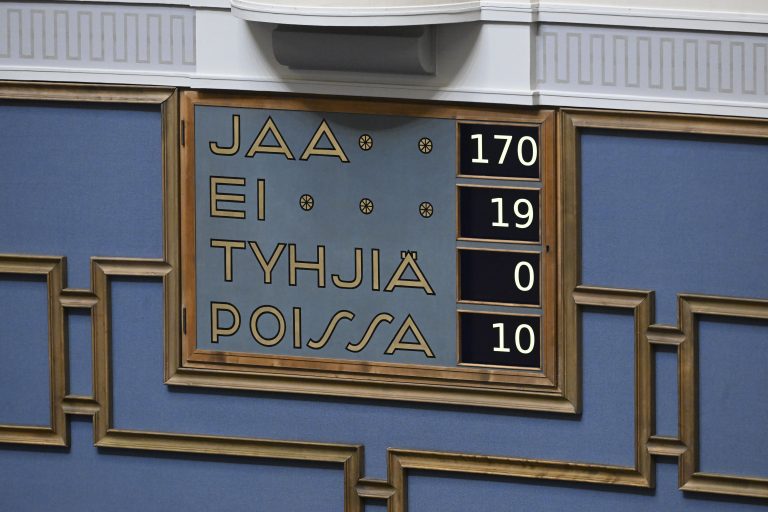
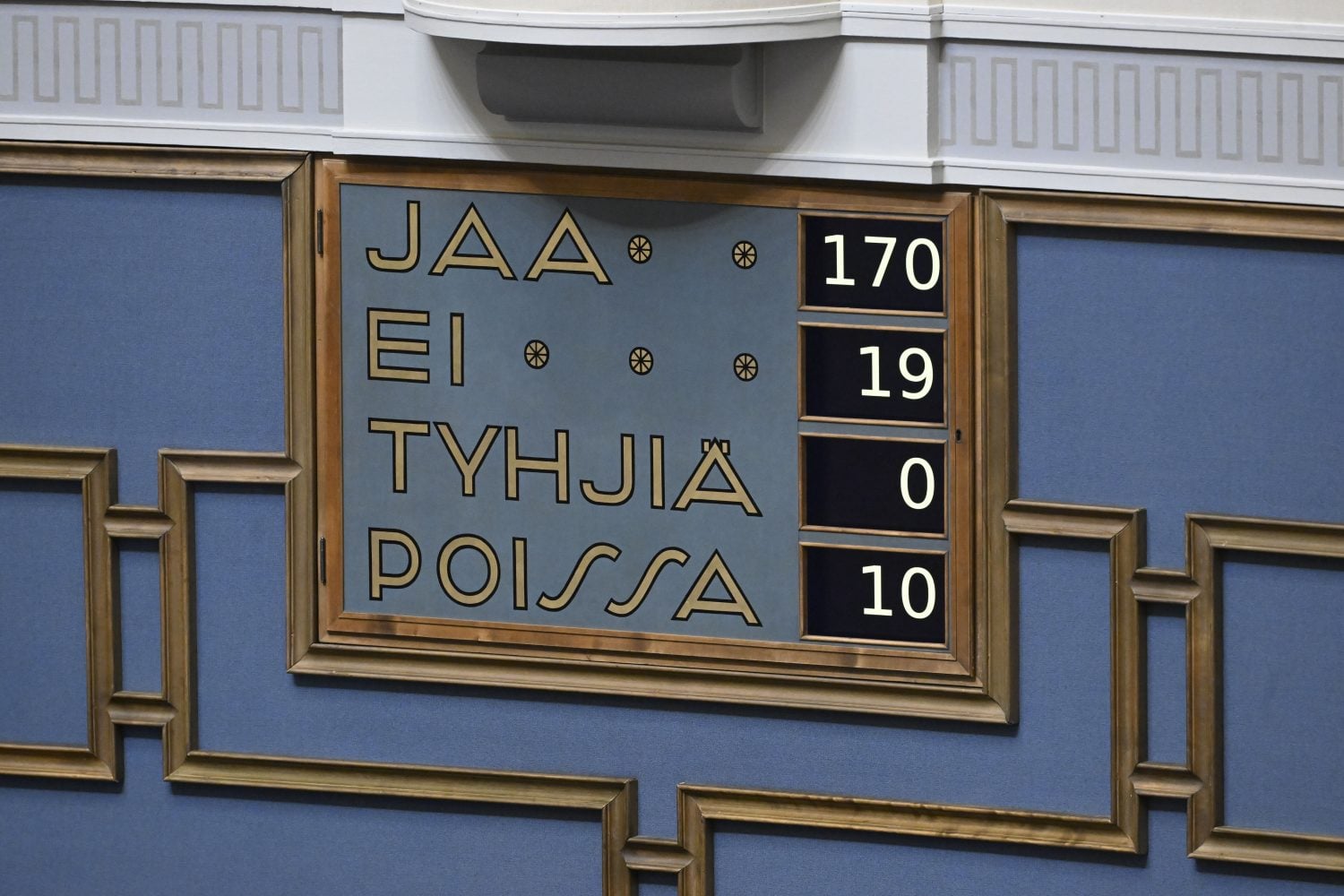
MPs first voted 170–19 to declare the bill urgent. The same 170–19 result was recorded in the final vote on approving the extension. Ten MPs were absent.
The law required an unusually broad parliamentary majority because it was enacted as a limited exception to the Constitution. Declaring the bill urgent required the support of five-sixths of MPs voting, after which its final approval required a two-thirds majority.
Prime Minister and National Coalition Party chair Petteri Orpo welcomed the result after the vote.
“Russia’s behaviour does not in any way indicate that the security environment has eased, and that is why extending the Border Security Act is absolutely necessary,” Orpo told reporters in parliament.
He also welcomed support from the opposition, which was needed to secure the required majority.
Nineteen MPs voted against
The 19 votes against the extension came from eight Green MPs, ten Left Alliance MPs and Eva Biaudet of the Swedish People’s Party.
The vote had attracted particular attention because of divisions within the opposition Social Democratic Party.
Six SDP MPs — Elisa Gebhard, Krista Kiuru, Johan Kvarnström, Matias Mäkynen, Nasima Razmyar and Antti Rinne — had asked the parliamentary group for permission to vote against the extension. The group did not grant exemptions from its decision to support the law.
Gebhard, Kiuru and Mäkynen were absent from Wednesday’s vote. SDP parliamentary group chair Tytti Tuppurainen said they had legitimate reasons for their absence.
Orpo said the most important outcome was that the legislation passed, while acknowledging that the issue remained difficult for some Social Democratic MPs.
The law, formally concerning temporary measures to combat instrumentalised migration, was originally approved in July 2024.
Its purpose is to give Finnish authorities additional powers in the most serious situations involving what Finland describes as instrumentalised migration — the use of migrants by a foreign state to exert pressure on the country.
Orpo responds to Razmyar
SDP MP Nasima Razmyar has said she hopes Finland can abandon the exceptional legislation as soon as possible and replace it with a common European Union solution.
Orpo was dismissive of the prospect in the current security environment.
“Of course, one can always live in a dream world, but unfortunately we see no signs that Russia has changed its approach,” Orpo said.
“Our task is to take care of Finland’s security.”
Finland’s land border crossing points with Russia remain closed under a separate government decision. The parliamentary vote on Wednesday concerned the Border Security Act rather than the closure of the crossings themselves.
The legislation will now remain in force until December 31, 2028.