
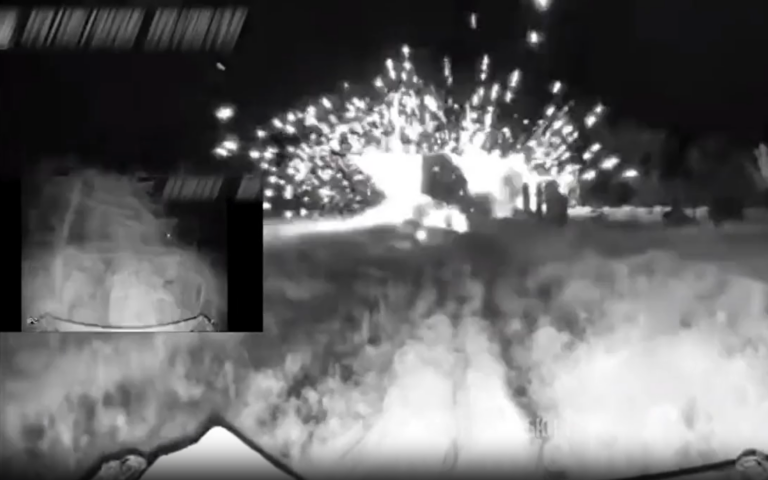
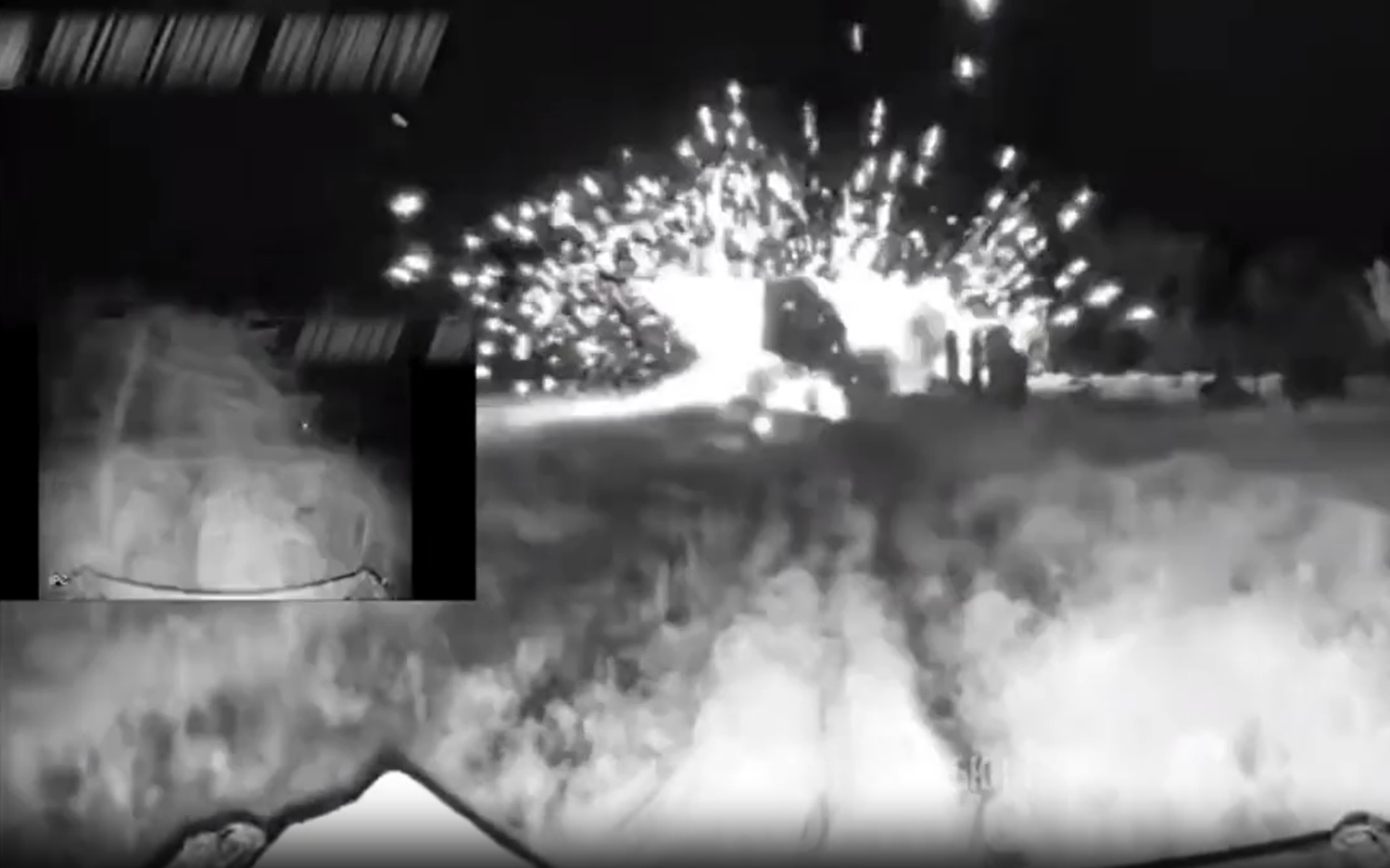
Ukrainian forces are using heavy bomber drones to deliver explosive-laden ground robots deep behind Russian lines in northern Donetsk, the commander of the unit deploying them has told Verkkouutiset.
Mykola “Makar” Zynkevych, commander of the NC13 unit in Ukraine’s 3rd Separate Assault Brigade, says the tactic is disrupting Russian rear areas as part of the 3rd Army Corps’ Vivaldi counteroffensive.
The unmanned ground vehicles, or UGVs, can be flown 15–20 kilometres beyond the front line. Once delivered, they continue towards their assigned targets under their own power.
The key advantage is that troops do not have to undertake the most dangerous part of the mission. According to Zynkevych, NC13 is the world’s first unit to deploy explosive ground robots in this way deep behind enemy lines.
He stresses that this is no longer a one-off experiment, but a tactic the unit is systematically developing and expanding.
“Besides striking important enemy targets deep behind the lines, we create constant uncertainty. They do not know where the robots will appear next, how far behind their lines they will be delivered or what their targets will be,” he says.
“This forces the enemy to change how it operates throughout its rear areas: to deploy personnel there, strengthen protection for key sites, reorganise logistics, change the routes used by troops and reserves, and protect command posts.”
Ukraine is conducting the Vivaldi counteroffensive north of Lyman. According to the 3rd Army Corps commander, Brigadier General Andrii Biletskyi, Ukrainian forces recaptured a total of 125 square kilometres during the operation’s first two phases. Russian personnel losses over the course of the operation are estimated at more than 3,000.
Ukrainian forces say they have combined aerial drones, ground robots, artillery and electronic warfare to keep Russian troops unaware of the direction of the attack for as long as possible.
Ground robots cannot operate alone
Zynkevych describes explosive ground robots as highly effective weapons. Depending on their design and mission, they can deliver substantial explosive payloads directly to a target.
Their effectiveness, however, depends heavily on how well they are integrated with other battlefield capabilities and how thoroughly the mission is planned.
“For an unmanned ground vehicle to complete its mission, extensive preparation is needed: reconnaissance, identifying the target and route, a reliable communications link and satellite communications, aerial drones, electronic warfare and electronic intelligence assets and, in some cases, coordination with infantry, artillery or other strike assets.”
Aerial drones play a particularly important role.
“Whenever aerial drones are available, they always operate in coordination with ground robots,” Zynkevych says.
“Drones destroy obstacles along the ground robots’ route, protect them during the mission and strike identified targets. In practice, operations involving explosive ground robots cannot be carried out without aerial drones, from reconnaissance of the target or route to escorting and protecting the robots as they move.”
Despite the technology involved, the commander stresses that people remain crucial. Mission planning, preparing the combat systems, selecting routes, controlling the vehicles and making timely decisions largely determine the outcome, he says.
For Operation Vivaldi, Ukraine established an electronic warfare “protective bubble”. According to the 3rd Army Corps, it disrupted or prevented more than 20,000 Russian drone missions.
Ukrainian forces have eliminated a Russian salient north of Lyman, complicating Moscow’s plans to outflank Ukraine’s key belt of fortified cities in the Donetsk region from the north. Operation Vivaldi is continuing.
Robots go in before the infantry
Zynkevych says unmanned ground vehicles have significantly changed the battlefield and the way operations are conducted.
“Today, more and more tasks previously carried out by infantry can be handed over to technology, from logistics, evacuation and mine clearance to offensive operations, holding defensive lines and sabotage missions behind enemy lines.”
According to the commander, the 3rd Assault Brigade now rarely plans operations without ground combat robots. They are increasingly sent ahead of the infantry to carry out the most dangerous tasks, reducing soldiers’ direct contact with the enemy.
He stresses that the technology has moved beyond the experimental stage.
“This is no longer an experiment or a technology of the future. It is a tool of modern warfare … Wherever people are at risk, technology should do the job, because an infantry soldier’s life is irreplaceable, and robots don’t bleed.”